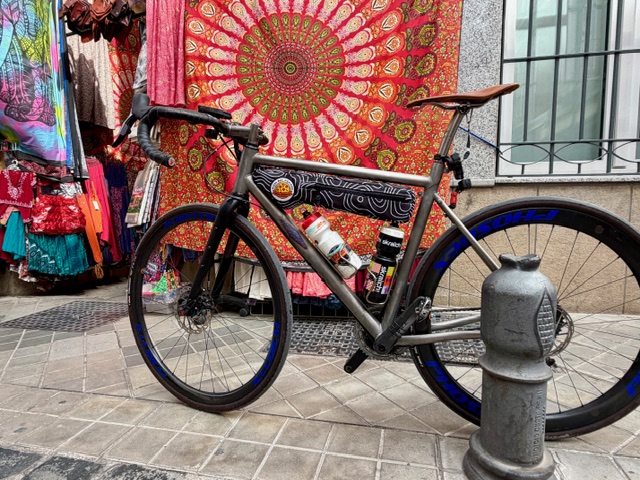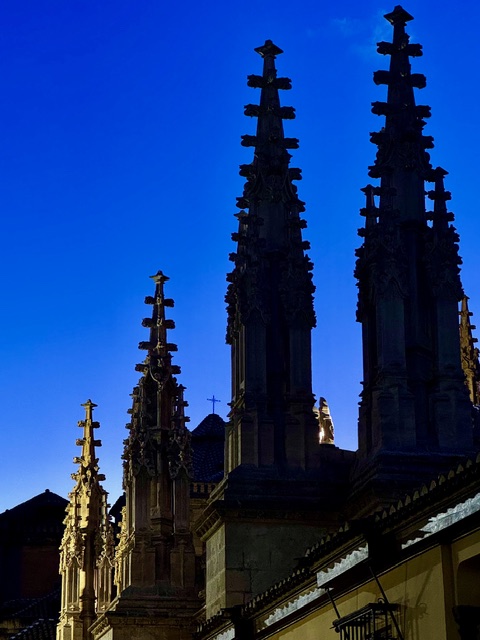
Granada is a jewel of a city, on the western side of the O.G. Sierra Nevada mountains. By some standards it’s at high altitude, but at about 2,400’ (740m), I’d say it has some nice low altitude. It serves as a base to access higher altitudes, and as such, is a popular region with pro cyclists. Pico de Veleta, at 11,135’ (3,398m) is the 3rd highest peak in the Sierras and has the highest paved road in Yerp at 10,827’ (3,300m). While they stay higher in the mountains, Granada has lots to offer for non-pros.
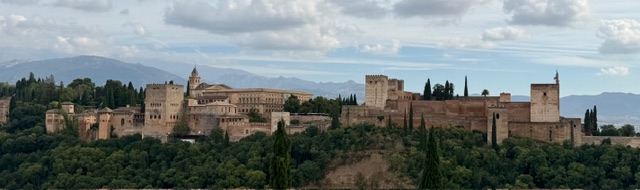
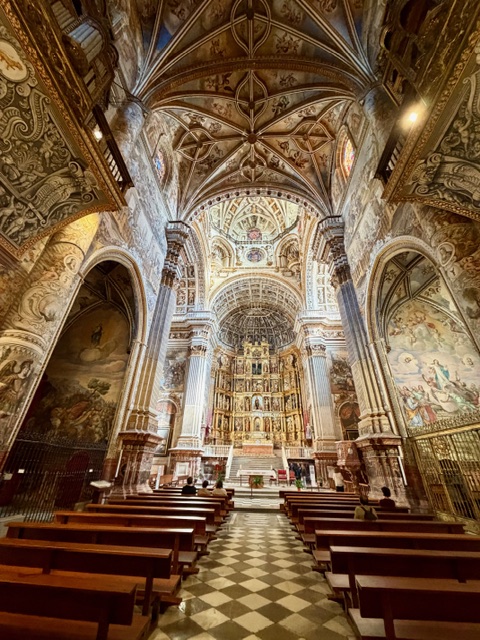
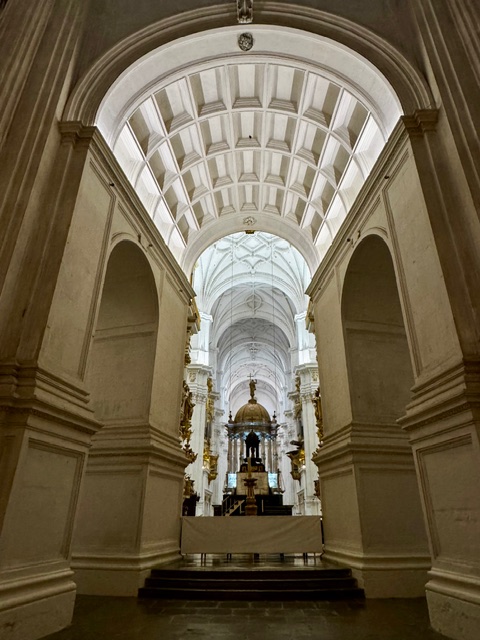
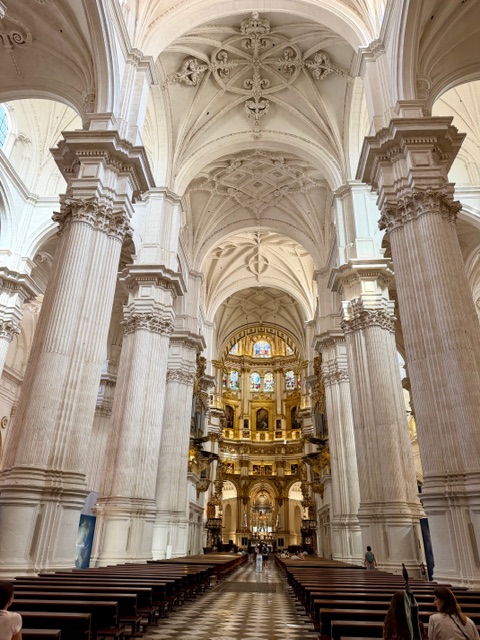
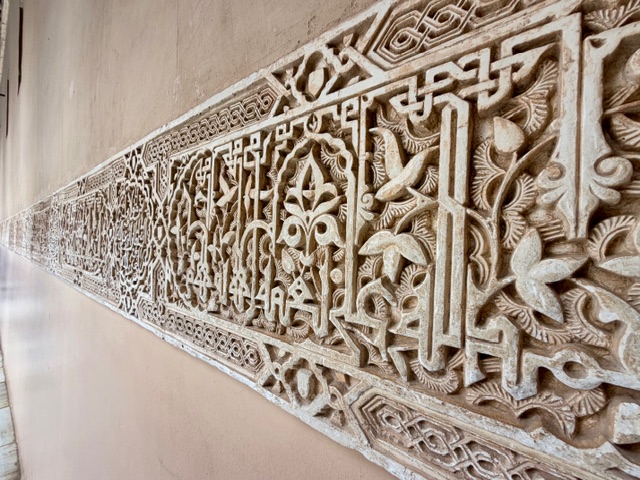
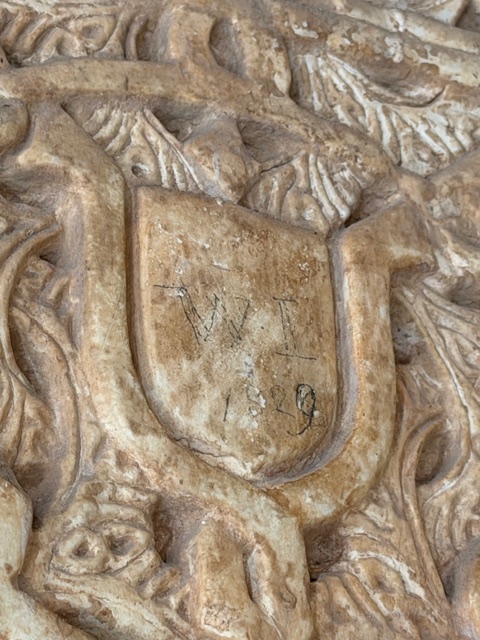
Besides being the site of the famous Alhambra, first popularized for adventure tourism by Washington Irving, the city hosts many other amazing sights, including the Cathedral and the Monastery Chapel of San Jeronimo.
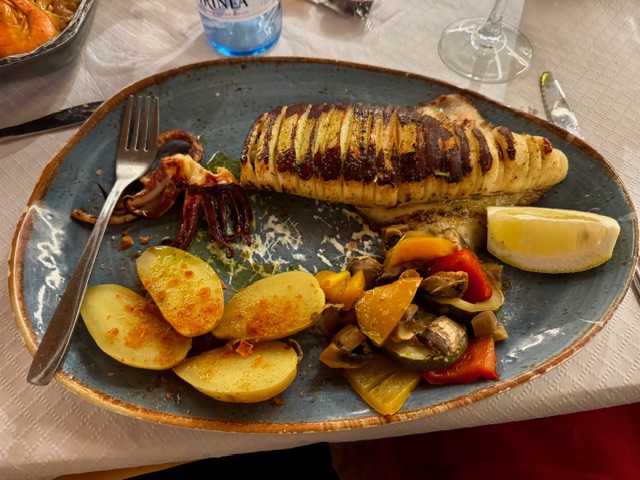
At about 230,000 people, Granada’s big but not huge, and has a wide variety of interesting and diverse neighborhoods. Foodies can rejoice at the vast number of excellent restaurants, but like all Spanish meals, timing for an American with hanger issues can be tough: hit it wrong and every table is full; hit it right and you have a private restaurant.
At first blush, it does not have the same depth of route inventory as Girona, but based on the 5 routes we tested and the number of cyclists we saw, there is plenty to keep you well entertained both on and off the bike. In October, 2026, Spain passed new laws for cyclists, which improve safety by requiring helmets, making cars slow to 20kph below the speed limit when passing, and allowing cyclists to take the whole lane in smaller city streets where passing isn’t possible. It also bans and increases fines for riding on the sidewalk, so this will be interesting to see how the food delivery guys deal with it.
Granada’s drivers didn’t get the memo on the change in the laws, but that’s not because they are dangerous- in fact, across the board they were the most cycle-friendly drivers I’ve ridden amongst. Cycle lanes and sharrows abound, and while there are some bike paths along certain roads, most of what we rode were marked in the center lane of the standard roadways. Being Yanquis, we rode single-file, far to the right, reflecting the F-150 induced trauma we have suffered in the land of the Gashole. The locals, however, rode down the center, 2 abreast. While I desperately wanted to emulate such freedom, my muscle memory wouldn’t allow it.
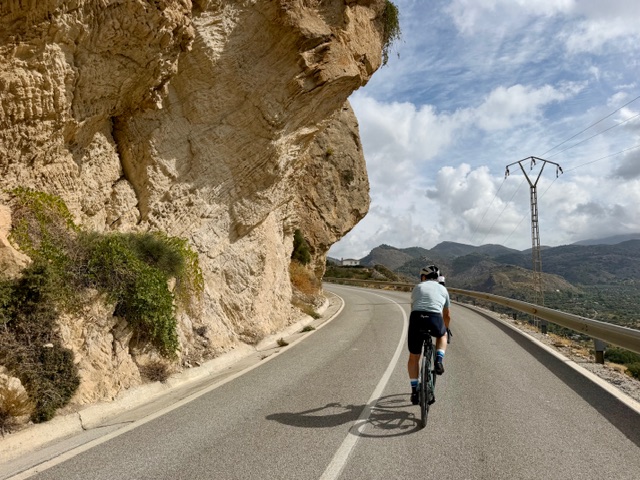
We stayed a few hundred feet from the cathedral, basically in the heart of the city. Even from the dense core of the twisted, narrow streets, getting to the edge of the city and open roads was rarely more than 5km. In particular, heading eastward into the foothills of the Sierras, access to quiet roads was fast, even faster than some routes in Girona.
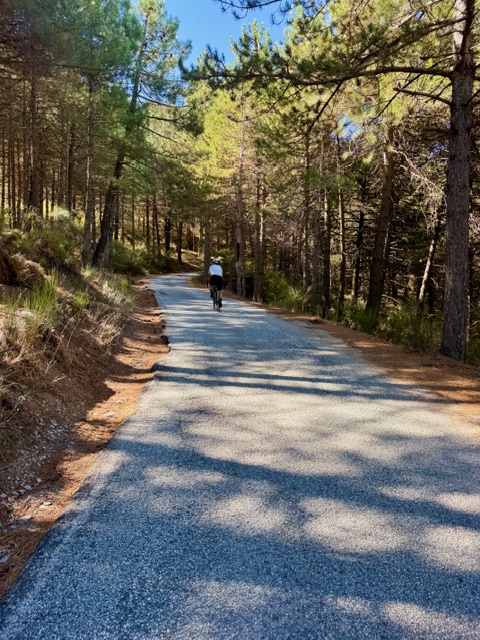
As noted, the Sierras are mountains, and if you head towards them, the compass points due up. The higher elevations get snow, but the lower roads are built without any consideration for plows or greasy frozen surfaces. The baseline slope is about 7%, but if you get bored with that gradient, they solve that by providing ramps of 8, 12, and 19%. It can be hard to sneak in a double-digit climb, but their civil engineers must have just assumed your eyes would be crossed and you wouldn’t notice anything past 11%.
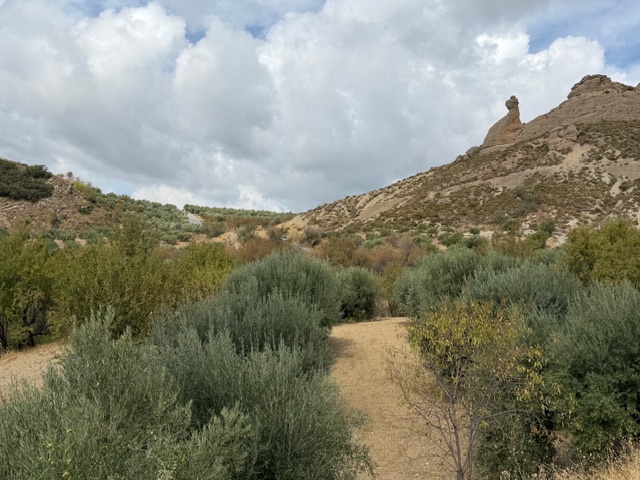
Safe bet.
Some of these gradients go for hundreds, or even thousands, of meters, but it only feels like dozens of lifetimes until the pitch breaks over and eases down to a manageable 10%. The upshot is, when you come here, bring a pair of climbing legs. One of our routes gave us a classic Colorado Warm-Up (™) of just about 10 blocks before an 1,800’ climb started.
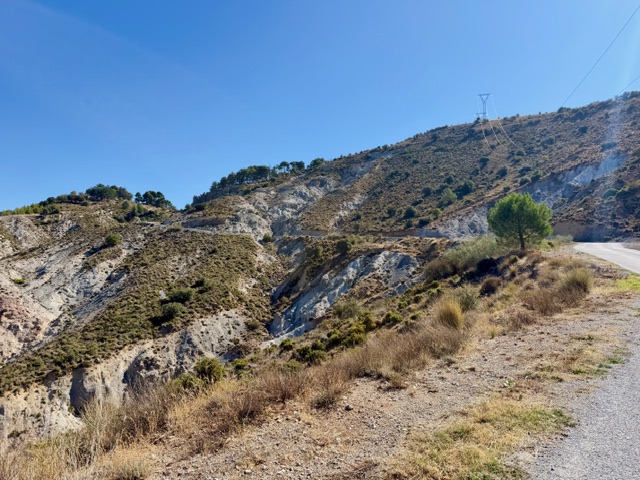
Like most of what I’ve ridden in Spain, the road surfaces are generally excellent, smooth, and clear of debris and sand. Corners are well-designed and allow for deep, carving arcs on descent, and despite my whining about the climbing, are a pleasure to ride. Even the surfaces on small, twisting roads through olive groves far out in the toolies give me pavement envy as I think about my own driveway.
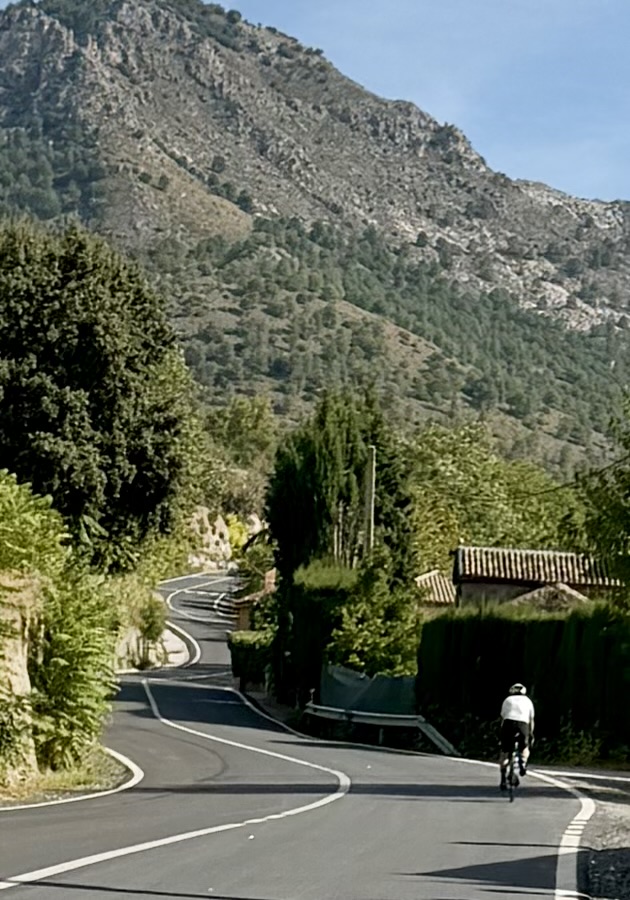
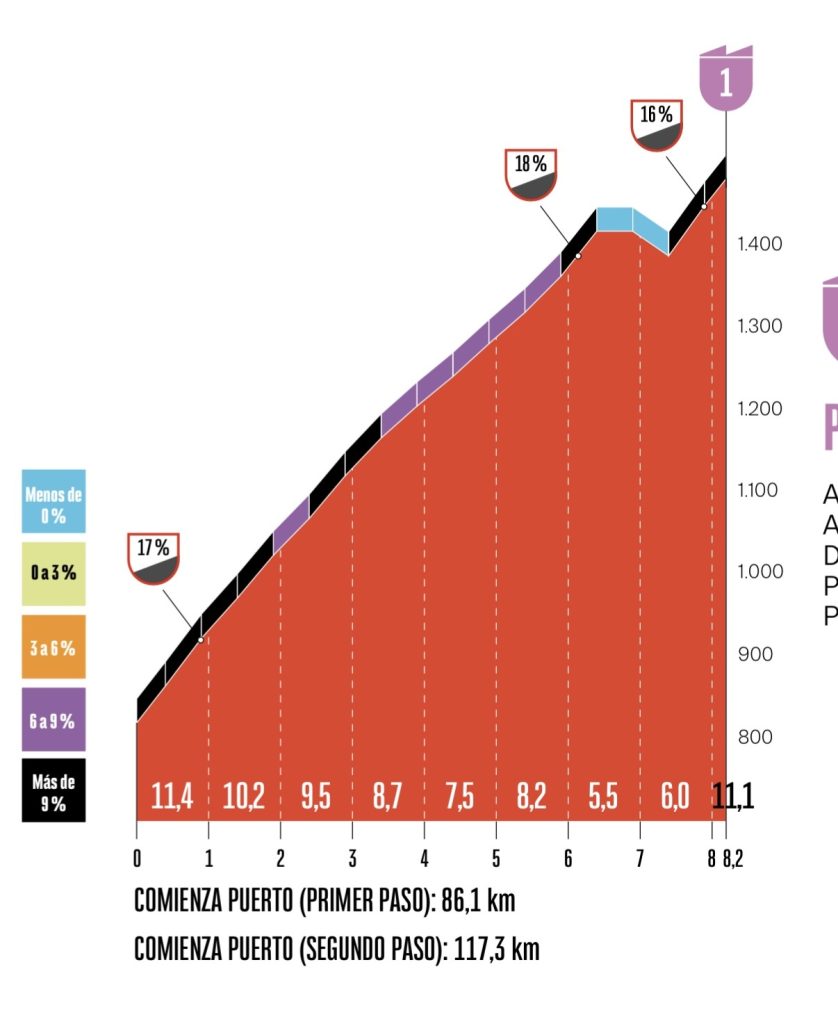
La Vuelta has come through here on multiple occasions, including 2026, when it finished in the city. We rode some roads that were used in the race, and descended into Monachil, a beautiful little town perched on the side of a canyon. The climb out of Monachil works its way up to a small saddle before dropping and connecting to the main road that leads to Pico. We were heading up that main road, but after 2,000’ of climbing, decided we were full, and we backtracked to Monachil.
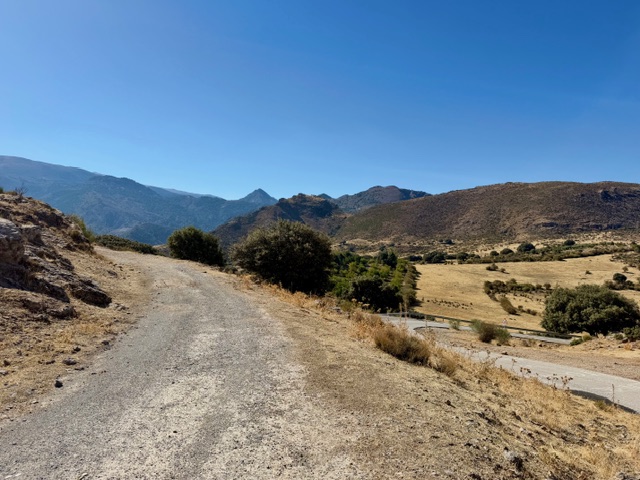
The descent was a brake-burner: fast, steep, exposed, not a square millimeter of shade. We rolled over names of pros painted on the road, and I realized that as steep and crazy as this road is as a descent, those guys climbed it in stage 20. Twice. Before getting to the main climb of the day, which was steeper and longer. Suffice to say, this MAMIL descended slower than the pros climbed, partially because they are a fraction of my age, weigh less than a pair of socks, and also they have better insurance.
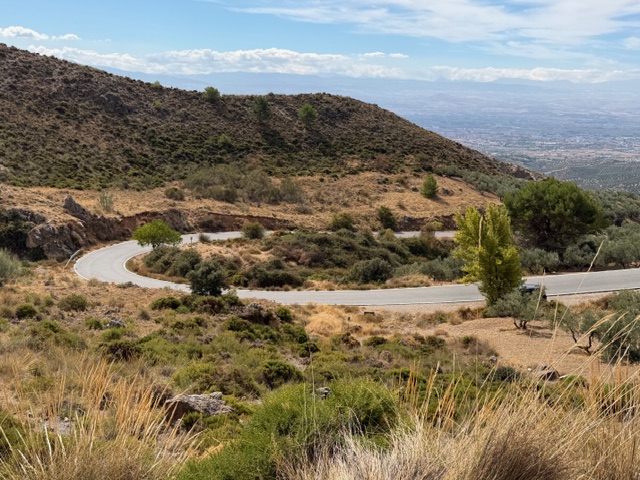
Granada’s other climbs and loops offer a wide variety of options, with some good out-and-back spurs. Many lead out of hot sun into pine forests, a welcome respite from the heat common in Andalusia. We took one that led to a dead end and trailhead nestled in the pines, where climbers headed out to scale some cliffs. The descent had a small handful of turns that were reminiscent of Sa Calobra, offering wide views if you dared take your eyes off the hairpin in front of you.
Granada is about 45 minutes north of Velez de Benaudalla, and a search of routes in the region will inevitably lead you towards Cycle Sierra Nevada. The Goat’s Path, in particular, shows up in Google. While these are rideable from Granada, you’ll need a car. If these routes are interesting to you, book time with CSN and ride out of Velez. Otherwise, there’s enough out of the center of Granada to keep you busy for a few hours on the bike and still have some time to tour a bit of history and eat a tapa or three.
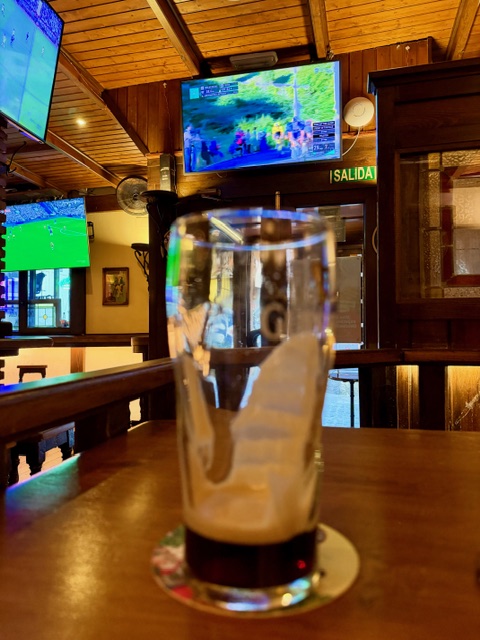
Once you’re off the bike and in the city, the rule of thumb is that if a restaurant looks good, it is. We got lucky at an Irish Pub off Elvira street, and the bartender took pity on us and put Il Lombardia on one of the umpteen TVs in the bar. All we had to do was promise to keep ordering beer until the race was over. The fact that there were only 2 other patrons in the bar may have helped us convince him that not a lot of people were clamoring for footie.
Visit Granada, spend some time in the Alhambra (hire a guide and buy tickets at least 3 weeks out, even in off season), tour the Cathedral and San Jeronimo, check out the Mirador of San Nicholas, and soak up the city, the history, and the cycling. It’s a bit off the beaten path for cycling destinations in Spain, but it shouldn’t be. Plan your trip around the heat- summer sees over 100F regularly, but spring and autumn can be quite pleasant. We hit it just right: a week before we arrived highs were in the upper 80s and low 90s, but during our visit highs were mid 70s and lows in the upper 50s. Little more than a light long sleeved shirt was needed at night.
There is a local airport, but flights are somewhat limited. Access the city by rail from Madrid or Malaga. The rail system is efficient and reasonably priced, and the journey is easy. Renfe has apparently done away with fees for bike cases (packed bikes vs bikes in Rinko bags), but not all employees are up to speed on this yet. Some cars have limited space for luggage, don’t be surprised if your bike ends up in a different car. Relax, no one wants to schelpp that damn thing, so it won’t get swiped at an intermediate stop. Granada has plenty to offer for a week of cycling, relaxing, and touristing. Make the most of it before word gets out.